
Clenbuterol: A Bronchodilator, Not a Steroid
Clenbuterol is not a steroid and does not behave like one. It is a beta-2 agonist: a bronchodilator, and the fat loss it is known for comes from a mechanism that also explains every one of its side effects.
What it does
Clenbuterol stimulates beta-2 adrenergic receptors. The result is a modest but real increase in metabolic rate and body temperature, plus bronchodilation, which is what it is actually prescribed for in some countries.
It has no anabolic activity in humans at the amounts people use. The muscle-sparing claims come from livestock research at amounts that would be dangerous in a person.
The side effects are the mechanism
Adrenergic stimulation produces exactly what you would expect: tremor, elevated heart rate, sweating, insomnia, anxiety and cramps.
These are not signs of a bad product. They are the compound doing its job, which is why people who tolerate it poorly rarely find a way to tolerate it better.
Cramps and taurine
Muscle cramps are among the most commonly reported effects, and the usual explanation involves taurine depletion. Adequate hydration and electrolytes are the sensible baseline regardless of mechanism.
Receptor downregulation
Beta-2 receptors downregulate with continuous exposure, which is why clenbuterol stops working after a couple of weeks and why cycling patterns exist at all.
Increasing the amount to compensate raises the cardiovascular strain without restoring the effect, which is the trap.
The cardiac question
This is the part that deserves genuine caution. Clenbuterol raises heart rate and has been associated with cardiac hypertrophy in animal studies at sustained exposure.
Anyone with a cardiac history, high blood pressure, or a stimulant sensitivity should not treat this as a routine fat loss option. It is also worth naming that its effect size is modest: the deficit does the work, and clenbuterol nudges it.
How it compares to a GLP-1
Completely different mechanisms. Clenbuterol raises expenditure slightly; a GLP-1 reduces intake substantially by changing appetite. See semaglutide vs tirzepatide vs retatrutide and GLP-1 side effects explained.
For most people the appetite route is both more effective and more tolerable.
Where it fits
A short run, late in a cut, in someone without cardiovascular concerns who has already got the deficit and training right. Not a starting point, and not something to run continuously.
Supplied for research purposes only.
Products covered in this guide
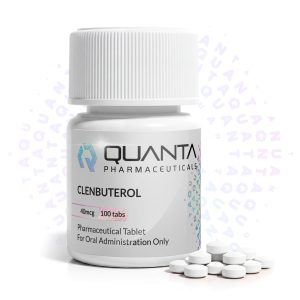
 Quanta Pharma
Related guides


Ready to get started?
Browse our range of pharmaceutical-grade peptides, all third-party tested and verified.
Shop All Products →

💬 Discussion