
Semaglutide vs Tirzepatide vs Retatrutide: What Changes
Semaglutide, tirzepatide and retatrutide are three generations of the same idea. Each one adds a receptor, and each addition changes what the compound does and how people respond to it.
This is a plain comparison of the three: what each targets, how they differ in practice, and what the format options are in the UK.
The short version
- Semaglutide, single agonist. Acts on the GLP-1 receptor.
- Tirzepatide, dual agonist. GLP-1 plus GIP.
- Retatrutide, triple agonist. GLP-1, GIP and glucagon.
More receptors is not automatically “better” for every person. It changes the side effect profile and the dose response as much as it changes the effect.
Semaglutide: the single agonist
Semaglutide mimics GLP-1, a hormone released after eating. It slows gastric emptying and acts on appetite signalling in the brain. It is the most studied of the three and the one with the longest real-world track record.
Because it acts on one receptor, its effect profile is the most predictable of the three, and it is usually the reference point people compare the others against.
Tirzepatide: adding GIP
Tirzepatide adds GIP (glucose-dependent insulinotropic polypeptide) alongside GLP-1. GIP has its own effects on insulin response and fat handling, and there is evidence the two receptors together produce a stronger effect than GLP-1 alone at comparable doses.
Practically, people often report tirzepatide feels less harsh on the stomach than an equivalent semaglutide dose. That is not universal, and it is not a rule you should plan around.
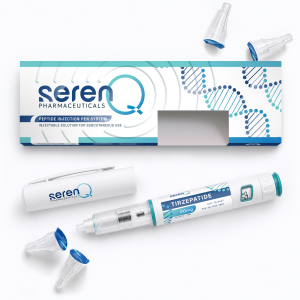
Available here as SerenQ Tirzepatide in a sealed 20mg or 40mg pre-filled pen, or as vials in the metabolic peptide range.
Retatrutide: adding glucagon
Retatrutide adds a third target, the glucagon receptor. Glucagon raises energy expenditure, so where the first two work primarily by reducing intake, retatrutide also acts on the output side.
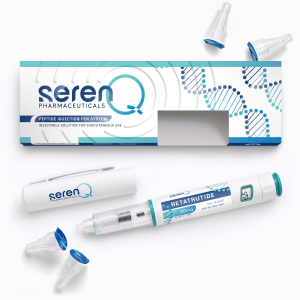
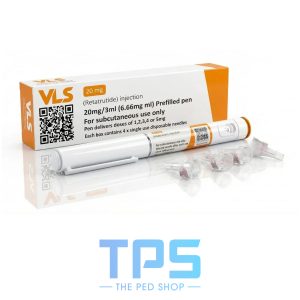
It is the newest of the three and has the least real-world history. That cuts both ways: the reported effect sizes are the largest, and the long-term picture is the least filled in. Available as SerenQ Retatrutide in 20mg or 40mg pens.
What actually differs day to day
Titration matters more as you add receptors. All three are titrated upward rather than started at a target dose, and the more receptors involved, the more the starting point and the pace of increase shape how tolerable it is.
Side effect profile shifts rather than disappears. Nausea, reduced appetite and gastric slowing are common to all three. Which one suits a given person is individual, and switching between them is common.
Format changes the handling, not the compound. A vial requires reconstitution and dose maths; a pre-filled pen is dialled in units. Same molecule either way. See peptide pens vs vials for what that changes in practice.
Choosing between them
If you want the longest track record and the most predictable profile, semaglutide is the reference. If you want a stronger effect with a profile many find easier on the stomach, tirzepatide is the middle option. If you want the newest and strongest-reported compound and accept a thinner evidence base, retatrutide is the frontier.
Browse the full range in GLP-1 receptor agonists or the SerenQ pre-filled pen range.
Supplied for research purposes only. This article is informational and is not medical advice.
Products covered in this guide
 SerenQ
Related guides
Ready to get started?
Browse our range of pharmaceutical-grade peptides, all third-party tested and verified.
Shop All Products →

💬 Discussion