
Priming a Peptide Pen and Fitting the Tip
Priming is not optional and it is not waste. A fresh tip contains air, and air dialled out of a pen delivers nothing, which is why a skipped prime is one of the most common reasons someone concludes a pen is underdosed.
Why a fresh tip needs clearing
Pen tips ship dry and sealed. When you screw one on, the hollow of the needle and the tiny space between it and the cartridge seal are full of air.
Dial and press without clearing that air first, and the mechanism advances correctly while what actually leaves the needle is air followed by an incomplete amount of solution. The dial moved, the click sounded normal, and the delivery was short. Nothing about the pen tells you this happened.
The sequence
1. Inspect before you attach anything. Look at the solution through the cartridge window. It should be clear. Cloudiness, visible particles or discolouration mean stop. See storing peptides properly.
2. Clean the septum. Wipe the rubber seal at the cartridge end with an alcohol swab and let it dry.
3. Attach a new tip. Straight on, screwed until seated, not forced. A cross-threaded tip is the usual cause of a leak at the collar.
4. Dial a small amount and expel it upward. Point the pen up, tap gently so any bubble rises toward the needle, then press until you see a droplet at the tip.
5. Repeat if no droplet appears. A new cartridge often needs more than one attempt because the whole needle path is dry.
6. Now dial your actual amount. Only once you have seen liquid at the tip is the pen delivering what the dial says.
The droplet is the confirmation
Everything above reduces to one rule: the prime is complete when you see liquid, not when you have pressed a set number of times. Counting presses is guessing. Seeing a droplet is knowing.
If you have pressed several times with no droplet, stop and diagnose rather than continuing to dial: a blocked or cross-threaded tip will not fix itself, and repeated dialling only spends solution. Peptide pen troubleshooting covers the causes.
A new tip every time
Reusing a tip is a false economy. A needle blunts measurably on first use, which makes the second use worse; the lumen can retain residue that dries; and leaving a tip attached between uses leaves an open path into the cartridge, which invites both contamination and slow leakage.
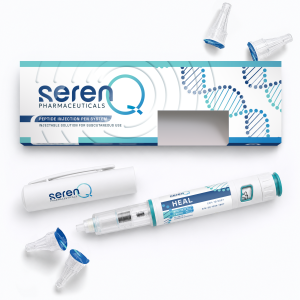
Take the tip off after use, dispose of it in a sharps container, and put the cap back on the pen. SerenQ pens ship with tips included in the carton, so there is no reason to ration them.
How much this costs you
Priming consumes solution: a small amount per tip change, but it is real, and over a cartridge it accumulates. This is why the theoretical dose count from arithmetic always overstates the practical one, as covered in how many doses are in a 10mg pen.
The alternative, not priming, does not save anything. It just moves the loss from a visible droplet to an invisible short dose.
Where this applies
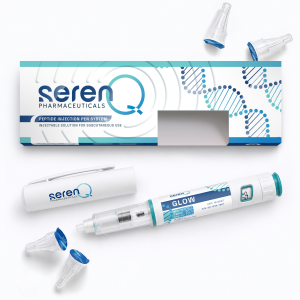
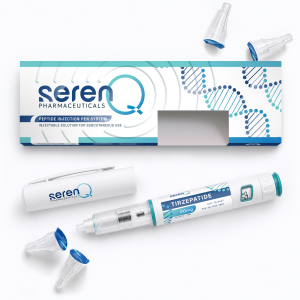
Every pen in the range, single compound or blend. A Glow pen primes exactly like a Tirzepatide pen. The mechanism is the same; only the contents differ.
For what the dial numbers actually mean once you are primed, see how to read a peptide pen dial.
Supplied for research purposes only.
Products covered in this guide
 SerenQ
Related guides
Ready to get started?
Browse our range of pharmaceutical-grade peptides, all third-party tested and verified.
Shop All Products →

💬 Discussion