
How to Verify a SerenQ Pen: Serials and QR Codes
Every SerenQ pen carries a serial number and a QR authenticity code, and the code resolves to SerenQ’s own verification record rather than to a reseller’s website. That distinction is the entire point of the system.
Why manufacturer-side verification matters
A seller telling you their stock is genuine is an assertion. A code that resolves against the manufacturer’s own record is a check you can run without trusting the seller at all.
It also means the check does not depend on where you bought the pen. The same code, scanned from any pen, is answered by the same authority. A reseller cannot issue codes, and cannot mark a counterfeit as valid.
What to check, and in what order
1. The carton before you open it. Retail packaging should be sealed and undamaged, with printing that is sharp rather than blurred. Counterfeits are usually let down by print quality and packaging finish long before anything else.
2. The serial number. Unique per pen. Check it is present, legible, and matches between the carton and the pen where both are marked.
3. The QR code. Scan it and confirm where it takes you. It should resolve to SerenQ’s verification record. A code that lands on a general marketing page, a shortener, or anything that is not the manufacturer’s verification system is a reason to stop.
4. The solution. Clear, no particles, no discolouration. This is a condition check rather than an authenticity check, but it is worth doing at the same moment. See peptide pen troubleshooting.
What verification does and does not tell you
It confirms the pen was manufactured by SerenQ and is a genuine unit. That is a real and useful thing to know.
It does not tell you how the pen was handled between leaving the factory and reaching you. A genuine pen that spent a week in a warm warehouse is genuine and degraded at the same time. Authenticity and condition are separate questions, and the code only answers the first, which is why how it was shipped still matters.
Check on arrival, not later
Verify when the parcel arrives, not when you first use it. If something is wrong, the useful window for resolving it is immediately, while the packaging is intact and the delivery is recent.
Photograph the carton, the serial and the scan result before opening anything. If a question arises later, a specific serial and a timestamped photo turn a vague complaint into an identifiable unit.
Keep the carton
People discard the box and then have no way to identify what they hold. The carton carries the serial, the batch and the storage guidance printed for that specific product, and it is the thing that makes a pen identifiable rather than generic.
It is also what makes a pen straightforward to travel with, a sealed, labelled retail box explains itself, as covered in travelling with peptide pens.
Why the range is built this way
Pre-filled pens are harder to counterfeit convincingly than powder in a vial, because a pen is a manufactured mechanical device rather than a stoppered container. Add per-unit serialisation and a manufacturer-side lookup, and the pen becomes individually traceable in a way loose vials never are.
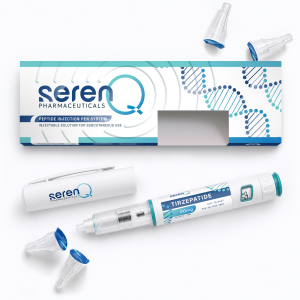
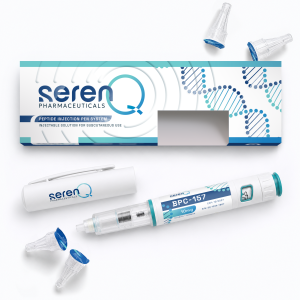
That applies across the whole range, from the Tirzepatide pen to the BPC-157 pen. Every unit carries its own serial and code. Peptide pens vs vials covers the broader format comparison.
Supplied for research purposes only.
Products covered in this guide
 SerenQ
Related guides
Ready to get started?
Browse our range of pharmaceutical-grade peptides, all third-party tested and verified.
Shop All Products →

💬 Discussion