
Cold Chain: What If a Peptide Pen Arrives Warm
A pen arriving at room temperature is usually fine. A pen arriving hot, or one that has been frozen, is a different conversation. Knowing which you are holding is the difference between discarding something good and using something spent.
Peptides tolerate more than people assume
Short excursions outside refrigeration are normal and expected. Pens are shipped this way routinely, and a sealed cartridge that has spent a day or two in transit at ambient temperature is not automatically compromised.
What matters is the combination of how hot, how long, and how many times, not whether the pen was ever out of a fridge. Manufacturers build tolerance for ordinary transit into the product because ordinary transit is unavoidable.
The clock is cumulative
This is the part people miss. Time out of refrigeration adds up across the whole life of the pen. A few days in transit, plus a warm afternoon on a kitchen counter, plus a weekend away, all draw from the same budget.
So the useful habit is not to panic about any single excursion, but to keep the total small. Refrigerate promptly on arrival and put the pen back after use rather than leaving it out between doses. Storing peptides properly covers the day-to-day handling.
Heat is the enemy you can reason about
Degradation accelerates with temperature. A parcel left in direct sun, in a hot vehicle, or in a sun-facing porch box for hours is meaningfully different from one that sat in a cool hallway.
Heat damage is gradual rather than binary. There is no threshold at which a pen switches from perfect to ruined, potency declines. That is why a pen that arrives warm but clear is usually still usable, while one that arrives hot after a long delay is a judgement call rather than a certainty.
Freezing is the one that is not recoverable
Freezing can damage a peptide in solution irreversibly, and the cruel part is that a thawed pen frequently looks completely normal.
This is why pens should never travel in aircraft hold luggage, and why a cool pack should be cold rather than frozen and never in direct contact with the cartridge. If a pen has frozen, appearance is not evidence in its favour. See travelling with peptide pens.
What to do when a parcel arrives
Open it promptly. The worst outcome is a parcel sitting unopened somewhere warm for another day.
Look at the solution. Clear is expected. Cloudiness, particles, sediment or discolouration mean stop.
Refrigerate. Once you have inspected it, get it cold.
Check the serial and code while the packaging is intact, as covered in verifying a SerenQ pen.
When to raise it rather than use it
A parcel that was visibly delayed, arrived hot to the touch, or shows evidence of freezing is worth raising at the point of delivery rather than after you have opened and used it. So is any pen whose solution does not look right on arrival.
Photographs taken on arrival, with the serial visible, make that conversation concrete rather than anecdotal.
Where pens have the advantage
A sealed pre-filled cartridge is more robust in transit than a reconstituted vial, because there is no mixing step performed under uncontrolled conditions and the solution stays sealed until first use. It also means the in-use clock does not start until you attach a tip. Peptide pens vs vials covers the rest of that comparison.
Supplied for research purposes only.
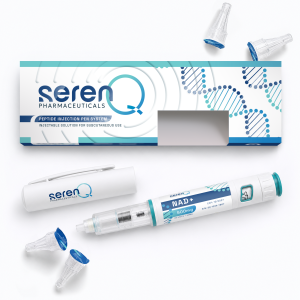
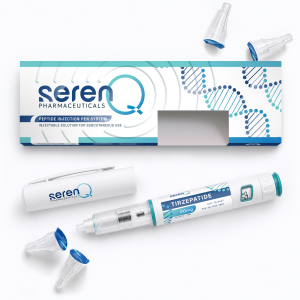
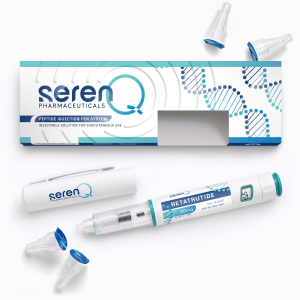
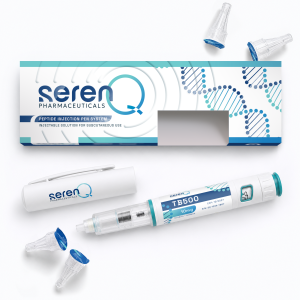
Products covered in this guide
 SerenQ
Related guides
Ready to get started?
Browse our range of pharmaceutical-grade peptides, all third-party tested and verified.
Shop All Products →

💬 Discussion